

Japchae: 5 Irresistible Ways to Enjoy Sweet Potato Noodles
Oh my goodness, let me tell you about Japchae! This delightful dish, a staple in Korean cuisine, has completely stolen my heart (and stomach!). It’s made with sweet potato glass noodles, which are these beautiful, chewy strands that soak up all the flavors you throw at them. When you combine those with tender beef and vibrant vegetables, you get a symphony of tastes and textures that’s just irresistible. Trust me, every bite feels like a warm hug! Japchae is often served during special occasions, but I love whipping it up for a cozy weeknight dinner or when friends come over. It’s not just food; it’s a way to share love and culture through delicious flavors. So, are you ready to dive into this amazing recipe? Let’s get cooking!
Ingredients for Japchae
Gathering the right ingredients is key to making the most delicious Japchae! Here’s what you’ll need:
- 200g sweet potato glass noodles
- 150g beef, thinly sliced (I like to use ribeye or sirloin for extra tenderness)
- 1 carrot, julienned
- 1 bell pepper, sliced (any color you love works, but I’m partial to red for that pop of color!)
- 1 onion, sliced
- 2 cups spinach (fresh is best, but you can use frozen if that’s what you have)
- 3 tablespoons soy sauce (I prefer low-sodium, so it doesn’t overpower the dish)
- 2 tablespoons sesame oil (this adds such a lovely nutty flavor, don’t skip it!)
- 1 tablespoon sugar (it balances the saltiness perfectly)
- 2 cloves garlic, minced (because garlic makes everything better!)
- Sesame seeds for garnish (optional, but they add a nice crunch!)
Make sure to prep everything before you start cooking so it all comes together smoothly. Enjoy the process—it’s all part of the fun!
How to Prepare Japchae
Now that you’ve gathered all your ingredients, let’s dive into the wonderful world of making Japchae! This process is super straightforward, and I promise you’ll be amazed at how everything comes together. Ready? Let’s go!
Soaking the Noodles
First things first, you need to soak those sweet potato glass noodles. Grab a bowl and fill it with hot water—make sure it’s hot, but not boiling! You want to let the noodles soak for about 30 minutes. This will soften them up and make them perfectly chewy. Give them a little stir in the water to help them along. I usually set a timer so I can get everything else prepped while I wait. Trust me, those noodles are going to be the star of the show!
Cooking the Beef
Once the noodles are soaking away, let’s move on to the beef. Heat a tablespoon of sesame oil in a large pan or wok over medium-high heat. You want it nice and hot, but not smoking. Add the thinly sliced beef and stir-fry it until it’s browned and cooked through—this should take about 3-4 minutes. The aroma will be absolutely mouthwatering! Make sure to break it apart with your spatula, so every piece gets that beautiful sear. Once it’s done, transfer the beef to a plate and set it aside. We’ll bring it back later!
Adding Vegetables
In the same pan, it’s time to add the veggies! Start with the sliced onion, carrot, and bell pepper. Stir-fry them for about 2-3 minutes until they’re just tender but still vibrant. Oh, the colors! Then toss in the minced garlic and give it a good stir for about 30 seconds—this is where the magic happens! Finally, add the spinach and cook until it wilts down, which should only take a minute or so. You want those veggies to maintain their crunch and color, so don’t overdo it!
Combining Ingredients
Now comes the fun part—mixing it all together! Carefully drain the soaked noodles and add them to the pan along with the cooked beef. Pour in the soy sauce and sprinkle on the sugar. Stir everything together, making sure the noodles and veggies are well coated in that tasty sauce. This is where you really want to get in there and toss it all around for about 2-3 minutes. The noodles will soak up all those delicious flavors, and you’ll feel like a pro chef!
Final Cooking Steps
For the last cooking phase, let everything sit in the pan for another 2-3 minutes on medium heat. This will help meld all those lovely flavors together. Give it a taste—this is your moment to adjust the seasoning if you want more soy sauce or a pinch of salt. Once you’re happy with it, garnish with sesame seeds for that extra flair! And there you have it—your Japchae is ready to serve! Wow, I can’t wait for you to dig in!
Tips for Success
Before you dive into making your Japchae, let me share some of my top tips to ensure it turns out absolutely perfect every time! Trust me, these little nuggets of wisdom can make a big difference.
- Adjusting the Seasoning: Taste your dish as you go! If you think it needs a little more flavor, add a splash more soy sauce or a dash more sugar to balance it out. It’s all about finding that sweet spot for your palate!
- Vegetable Variations: Feel free to mix in other veggies you love. Mushrooms, zucchini, or even broccoli can add great flavors and textures. Just make sure to chop them to similar sizes for even cooking.
- Don’t Overcook the Noodles: When soaking, keep an eye on the noodles. If they get too soft, they can become mushy when stir-fried. Aim for that perfect chewy texture!
- Make Ahead: Japchae actually tastes even better the next day! If you’re prepping for a gathering, consider making it a day in advance. Just store it in the fridge and warm it up gently before serving.
- Serving Temperature: Japchae can be enjoyed warm or cold, so don’t stress about serving it right away. It’s a versatile dish that works for any occasion!
With these tips in your back pocket, you’re all set to impress everyone with your delicious Japchae. Happy cooking!
Variations of Japchae
One of the best things about Japchae is how adaptable it is! You can easily switch things up to keep it exciting and suit your taste. Here are some of my favorite variations that you can try:
- Protein Swaps: While beef is a classic choice, you can use chicken, pork, or even shrimp for a different flavor profile. Just make sure to adjust the cooking time according to the protein you choose!
- Vegetable Medley: Feel free to toss in any veggies you love! Snow peas, baby corn, or sliced shiitake mushrooms can add delightful textures and flavors. Get creative with what you have on hand!
- Spicy Kick: If you like a little heat, add some sliced chili peppers or a dash of gochujang (Korean chili paste) to the mix. It’ll give your Japchae a spicy twist that’s oh-so-delicious!
- Sweet Potato Variety: For an interesting twist, try using a mix of sweet potato glass noodles and regular rice noodles. This combination adds a unique texture and flavor that’s totally worth trying!
- Vegan Version: To make a plant-based Japchae, simply omit the beef and use tofu or tempeh instead. You can marinate the tofu in soy sauce for added flavor before stir-frying it with the veggies!
These variations are just the tip of the iceberg! The beauty of Japchae is that it’s all about personal preference, so don’t hesitate to experiment and make it your own. Happy cooking, and enjoy the journey!
Nutritional Information for Japchae
Now, let’s talk about the nutritional side of this delicious Japchae! While it’s always best to enjoy food for its flavors and the joy it brings, having an idea of what you’re consuming can be helpful. Here’s the estimated nutritional breakdown for one serving of Japchae:
- Calories: 300
- Fat: 10g
- Saturated Fat: 2g
- Unsaturated Fat: 8g
- Trans Fat: 0g
- Carbohydrates: 45g
- Fiber: 3g
- Protein: 15g
- Sugar: 5g
- Sodium: 600mg
- Cholesterol: 30mg
Keep in mind that these values are estimates and can vary based on specific ingredients and portion sizes. But overall, Japchae is a hearty dish that provides a good balance of healthy carbs, protein, and flavor without going overboard. So go ahead, savor every bite, and enjoy the goodness that comes with it!
Frequently Asked Questions
I’ve gathered some common questions about Japchae that I think will help you on your cooking journey. Let’s dive in and clear up any confusion you might have!
Can I use other types of noodles for Japchae?
Absolutely! While sweet potato glass noodles give that authentic texture, you can experiment with rice noodles or even regular pasta in a pinch. Just keep in mind that the cooking times may vary, so adjust accordingly!
Is Japchae gluten-free?
Yes, Japchae is naturally gluten-free since it’s made with sweet potato glass noodles. Just be sure to check your soy sauce label, as some brands contain gluten. Opt for a gluten-free soy sauce to keep it safe!
How long can I store leftover Japchae?
Leftover Japchae can be stored in an airtight container in the fridge for up to 3 days. It’s actually great the next day, as the flavors meld together beautifully!
Can I make Japchae vegan?
Definitely! Just swap out the beef for tofu or tempeh, and you can add extra veggies for a nutritious and delicious vegan version. You won’t miss the meat at all!
What’s the best way to reheat Japchae?
To reheat, simply place it in a pan over medium heat with a splash of water or oil. This will help revive the noodles and keep them from drying out. Stir occasionally until warmed through, and you’ll have that tasty dish back in no time!
Serving Suggestions
Now that your Japchae is ready to rock, let’s talk about what to serve it with to create a complete and satisfying meal! It’s all about balance and variety, and I’ve got some fabulous ideas to elevate your dining experience.
- Kimchi: You can’t go wrong with a side of kimchi! This spicy, fermented vegetable dish adds a nice zing and complements the flavors of Japchae perfectly. Plus, it’s packed with probiotics!
- Rice: For a more filling meal, serve your Japchae over a bed of steamed rice. It’s a great way to soak up all that delicious sauce and makes for an extra hearty dish. Brown rice or jasmine rice are both fantastic choices!
- Korean Fried Chicken: If you’re in the mood for something crispy, why not pair your Japchae with some Korean fried chicken? The crunch and flavor contrast is absolutely delightful!
- Grilled Vegetables: For a lighter option, grilled veggies like zucchini, bell peppers, and eggplant make a colorful and tasty side. Just toss them on the grill with a bit of olive oil and seasoning!
- Egg Soup: A warm bowl of egg drop soup or a simple miso soup can be a comforting addition to your meal. It adds a nice warmth and complements the heartiness of the Japchae.
Mix and match these sides based on what you have on hand or what you’re in the mood for. The great thing about Japchae is its versatility, so feel free to get creative! No matter how you serve it, I know you and your guests are going to love it. Enjoy every bite!
Storage & Reheating Instructions
Alright, let’s talk leftovers! If you happen to have any Japchae left after your delicious meal (which is rare, but it happens!), proper storage is key to keeping those flavors intact and the noodles just right. Here’s how I do it:
- Storing Leftovers: Allow the Japchae to cool down to room temperature before transferring it to an airtight container. This keeps moisture from building up and prevents sogginess. You can store it in the fridge for up to 3 days. Just make sure it’s sealed well to keep out any unwanted odors!
- Reheating: When you’re ready to enjoy your leftovers, I recommend reheating them in a pan over medium heat. Add a splash of water or a drizzle of sesame oil to help bring the noodles back to life and prevent them from drying out. Stir occasionally until everything is warmed through, and you’ll be back in flavor town in no time!
- Microwave Option: If you’re short on time, you can microwave the Japchae in a microwave-safe dish. Just cover it with a damp paper towel to retain moisture and heat in 30-second intervals, stirring in between until it’s heated to your liking. Quick and easy!
Trust me, following these simple steps will keep your Japchae tasting just as good as when you first made it. So don’t hesitate to enjoy those leftovers—sometimes they’re even better the next day! Happy munching!
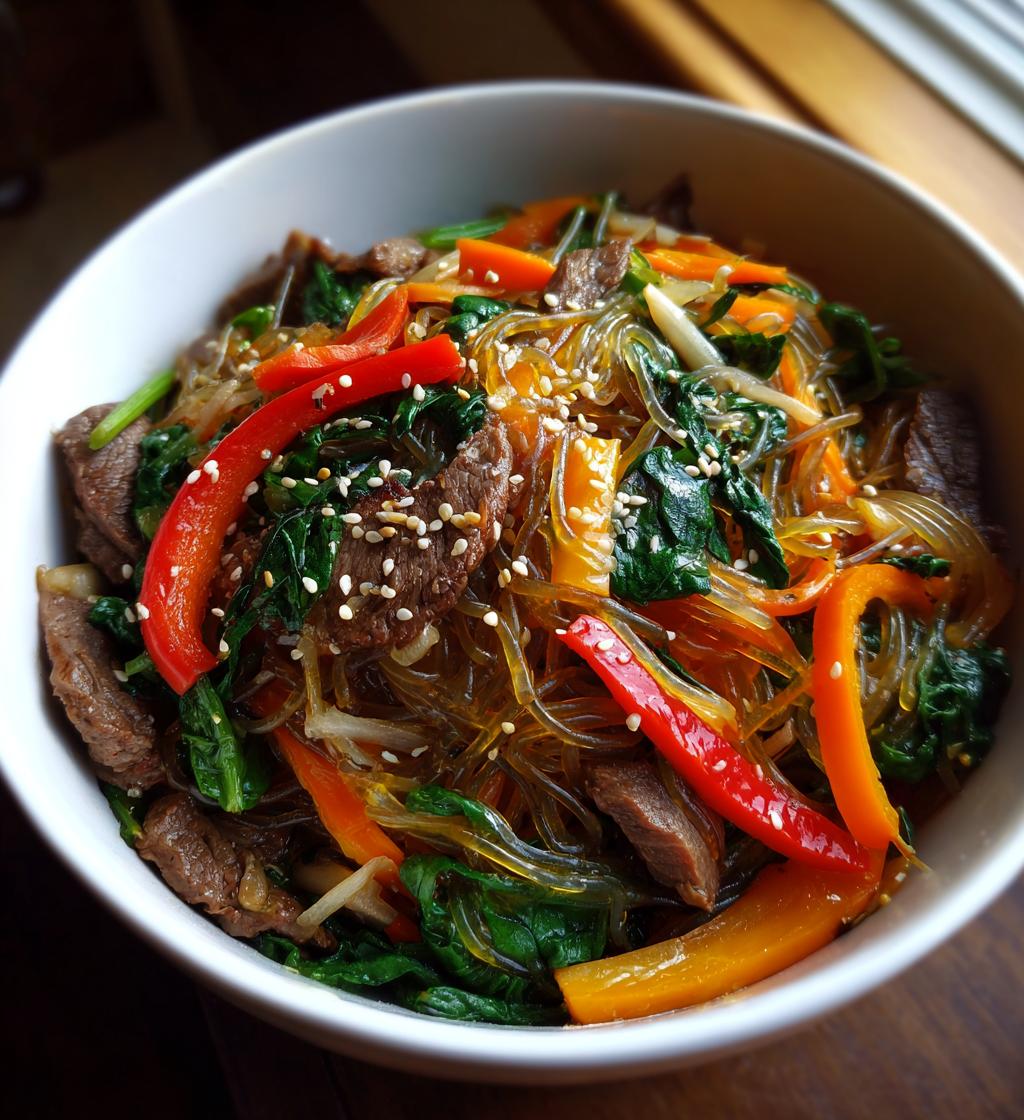
Korean ground beef is a great option to pair with Japchae for a complete meal.

Japchae: 5 Irresistible Ways to Enjoy Sweet Potato Noodles
- Total Time: 35 minutes
- Yield: 4 servings 1x
- Diet: Gluten Free
Description
Japchae is a Korean dish made with sweet potato glass noodles, vegetables, and beef.
Ingredients
- 200g sweet potato glass noodles
- 150g beef, thinly sliced
- 1 carrot, julienned
- 1 bell pepper, sliced
- 1 onion, sliced
- 2 cups spinach
- 3 tablespoons soy sauce
- 2 tablespoons sesame oil
- 1 tablespoon sugar
- 2 cloves garlic, minced
- Sesame seeds for garnish
Instructions
- Soak the sweet potato noodles in hot water for 30 minutes.
- In a pan, heat sesame oil and stir-fry the beef until cooked.
- Add garlic, onion, carrot, and bell pepper. Cook until vegetables are tender.
- Add the soaked noodles and spinach to the pan.
- Mix in soy sauce and sugar. Stir well to combine.
- Cook for an additional 5 minutes.
- Garnish with sesame seeds before serving.
Notes
- Adjust the seasoning to your taste.
- Add more vegetables if desired.
- Can be served hot or cold.
- Prep Time: 20 minutes
- Cook Time: 15 minutes
- Category: Main Dish
- Method: Stir-fry
- Cuisine: Korean
Nutrition
- Serving Size: 1 serving
- Calories: 300
- Sugar: 5g
- Sodium: 600mg
- Fat: 10g
- Saturated Fat: 2g
- Unsaturated Fat: 8g
- Trans Fat: 0g
- Carbohydrates: 45g
- Fiber: 3g
- Protein: 15g
- Cholesterol: 30mg
Keywords: Japchae, Sweet Potato Noodles, Korean Beef Noodles